A Simple Lead Follow-Up Plan That Actually Works | Kyle Rhine | Marketer Craft
How home service businesses can turn more inquiries and estimates into booked jobs without being pushy.
You've met with the homeowner, discussed their project, answered their questions, and put together an estimate. They seemed interested, the conversation went well, and you felt confident about your chances of winning the job. Then you send the estimate and hear nothing.
A few days pass. Maybe a week. You start wondering whether your price was too high, whether they found another contractor, or whether they decided not to move forward. Eventually, you get busy with other work and stop thinking about it.
Sound familiar?
For many home service businesses, this is simply how the sales process works. They respond to inquiries, prepare estimates, and wait for customers to make a decision. If the customer calls back, great. If not, everyone moves on.
The problem is that a customer who hasn't responded isn't necessarily a customer who isn't interested.
Homeowners are busy, projects get delayed, and purchasing decisions often involve multiple people, competing priorities, and significant financial commitments. Silence doesn't always mean no, but without a consistent follow-up process, businesses have little way of knowing the difference.
The good news is that improving follow-up doesn't require aggressive sales tactics, complicated technology, or an entirely new approach to selling. It starts with understanding why customers hesitate and building a simple process that helps them move forward.
Why Warm Leads Go Cold
It's tempting to assume that when a homeowner doesn't respond to an estimate, they've decided to hire someone else. Sometimes that's exactly what happened, but there are plenty of other explanations.
Someone considering a $20,000 roofing project might be reviewing financing options, discussing the expense with their spouse, or waiting for an insurance decision. A homeowner planning a kitchen remodel may need additional time to finalize materials, compare proposals, or determine when the disruption will fit their family's schedule.
Even relatively straightforward services can involve delays. A landscaping customer might be waiting until spring, while someone considering a new HVAC system may want to understand the differences between several equipment options before committing.
These customers aren't necessarily rejecting your business. They're working through a decision that may be more complicated than it appears from your side of the conversation. And sometimes, people simply forget. An estimate arrives while they're at work, they intend to review it that evening, and other priorities take over.
The mistake isn't assuming every cold lead can still be won. It's assuming that silence gives you enough information to stop communicating.
A thoughtful follow-up gives customers an opportunity to ask questions, clarify concerns, and tell you where they stand. Even when the answer is no, that information can help you improve your sales process and spend less time wondering about opportunities that are no longer active.
Follow-Up Should Help Customers Make Decisions, Not Pressure Them
Let's address something that makes many contractors uncomfortable about following up: nobody wants to sound like a pushy salesperson. If you've built your business around quality workmanship and strong customer relationships, the idea of repeatedly contacting someone who hasn't responded might feel inconsistent with how you want to operate.
That's understandable, particularly because we've all experienced businesses that take follow-up too far. Repeated calls, generic sales messages, and artificial urgency rarely make customers feel better about the company contacting them.
But there's an important difference between pressuring someone and helping them make a decision. Imagine receiving two messages after requesting an estimate.
The first says, "Just checking in again. Are you ready to move forward?"
The second says, "I wanted to follow up on the estimate we sent Tuesday. I know there are a few options to consider, so please let me know if you have questions about the materials, timeline, or anything included in the proposal."
Both messages are follow-ups, but the second gives the customer a reason to respond. It acknowledges that they may still be evaluating their options and offers useful assistance without demanding a decision.
The goal of good follow-up isn't to convince every customer to say yes. It's to make sure interested customers have the information and support they need to make a confident decision.
That approach is particularly valuable for home service businesses because customers are often purchasing something they don't fully understand. They may know they need a new roof, but not the differences between underlayment options. They may want a new furnace, but have questions about equipment efficiency, warranties, or installation costs.
Your experience can help them navigate those decisions. Follow-up simply creates another opportunity to provide that guidance.
A Simple Follow-Up Plan for Home Service Businesses
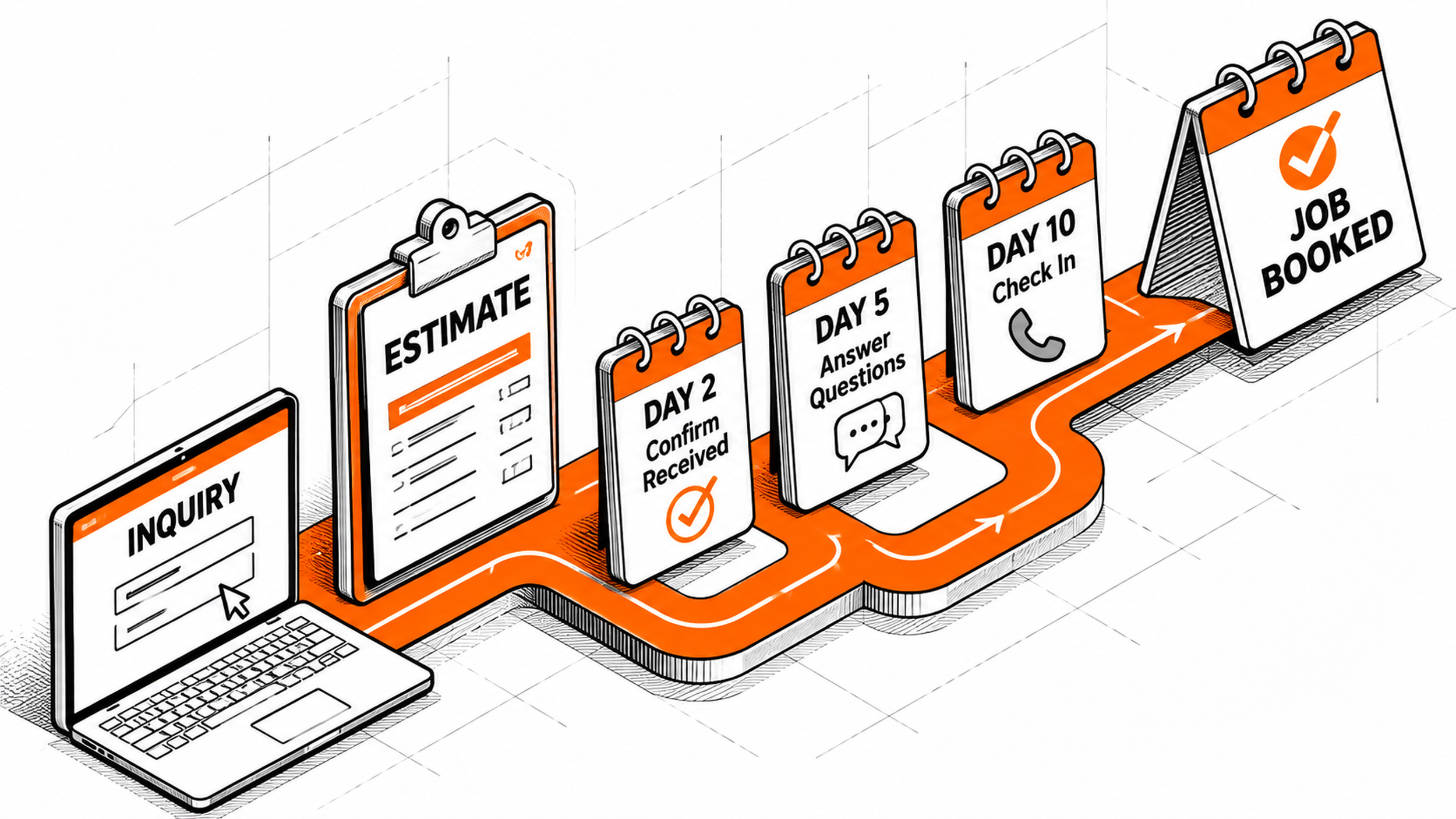
You don't need an elaborate sales sequence to improve your results. For most small and midsize home service companies, a consistent process with clear responsibilities and a few well-timed touchpoints is a good starting point.
The appropriate schedule will depend on the type of service, project urgency, and customer preferences. Someone dealing with an emergency plumbing issue requires a different response than someone planning a major addition next summer.
But for non-emergency estimates, the following framework can provide a practical foundation.
Step 1: Set Expectations Before Sending the Estimate
One of the easiest ways to improve follow-up is to make it part of the conversation before the estimate is delivered.
Rather than telling the homeowner you'll send something over and leaving the next step open-ended, explain what they should expect.
For example, you might say, "I'll send the estimate by tomorrow afternoon. Take some time to review it, and I'll check back later this week to answer any questions."
This accomplishes two things. First, it gives the customer a clear expectation for when the proposal will arrive. Second, it establishes that a follow-up conversation is a normal part of your process rather than an unexpected sales call.
For larger projects, it may be worth scheduling a brief proposal review instead of relying on the homeowner to interpret everything independently. That conversation can help clarify options, prevent misunderstandings, and identify concerns while you're both engaged.
Step 2: Confirm the Estimate Was Received
Once you've sent the estimate, don't assume the customer has seen it.
Emails get buried, attachments are overlooked, and occasionally proposals end up in spam folders. A short confirmation can prevent an otherwise promising opportunity from stalling over something as simple as a missed message.
If your estimate system provides reliable delivery or viewing information, use it. Otherwise, a brief note within a business day or two can be appropriate.
Example message:
"Hi Sarah, I wanted to make sure you received the estimate for your new patio. Let me know if you have any trouble opening it or if there's anything you'd like me to clarify. Thanks again for considering us."
The message is simple, relevant, and easy to respond to. It also reinforces that you're paying attention without immediately asking for a decision.
Step 3: Follow Up With Something Useful
If several days pass without a response, reach out again with the goal of helping the customer evaluate the proposal.
Think back to the questions they asked during your initial conversation. Were they concerned about the project timeline? Material durability? Maintenance requirements? The differences between two options?
Use that context to make your follow-up more meaningful.
A roofing contractor might offer to explain how the proposed materials differ from other options. A landscaper could clarify which parts of the project can be completed in phases. An HVAC company might answer questions about equipment efficiency or available warranties.
Example message:
"Hi Mike, I wanted to follow up on the HVAC replacement estimate we discussed. I know we covered a couple of equipment options, so I'm happy to walk through the differences if that would be helpful. Let me know what questions you have."
This type of communication demonstrates expertise while giving customers space to make their own decisions.
If they respond that they're still considering their options, ask when it would be appropriate to check back. That information is far more useful than guessing about their intentions.
Step 4: Make One Final Check-In
If you've confirmed the estimate was delivered and followed up without receiving a response, a final check-in can help clarify whether the opportunity is still active.
For many routine projects, this might happen approximately one to two weeks after sending the estimate. Larger or longer-term projects may require a different timeline.
Keep the message professional and give the customer an easy way to respond, even if they've decided not to proceed.
Example message:
"Hi David, I wanted to check in one last time regarding your window replacement estimate. If you're still considering the project, we're happy to answer any questions or discuss next steps. If your plans have changed, no problem at all. Thanks again for the opportunity."
At this point, the goal is to close the communication loop, not create additional pressure.
If the customer doesn't respond, move the opportunity into an inactive or future follow-up category based on what you know about their project. Avoid continuing to send repeated messages simply because the lead remains in your system.
Customers who ask you to stop contacting them should be removed from the relevant follow-up sequence promptly.
Make Follow-Up Easier Without Creating More Work
A common reason follow-up doesn't happen is that nobody has time to manage it. When you're balancing customer meetings, crews, estimates, and active projects, remembering who needs a call next Thursday isn't always realistic. The process needs to be simple enough to maintain when business gets busy.
For smaller companies, a shared spreadsheet may be sufficient. At a minimum, track the customer's name, contact information, requested service, estimate date, current status, and next follow-up date.
As inquiry volume increases, a customer relationship management (CRM) system can make the process easier by organizing leads, assigning tasks, setting reminders, and recording previous conversations.
Automation can also help with routine activities such as confirming that an inquiry was received, sending appointment reminders, or notifying someone that an estimate needs follow-up. But automation should support the relationship, not replace it.
A homeowner planning a significant remodel may appreciate a personal phone call to discuss their concerns, while a customer requesting routine lawn maintenance might prefer a simple text message. The right approach depends on the customer, the service, and the stage of the decision.
It's also important to respect communication preferences and applicable rules for automated calls, texts, and emails. Having someone's phone number because they requested an estimate doesn't automatically mean every type of automated marketing communication is appropriate.
The best systems make your business more responsive while allowing your team to focus on conversations where their knowledge and judgment add the most value.
Measure What Happens After You Send the Estimate
Once you've established a consistent follow-up process, the next step is understanding whether it's working. Many home service companies know how many estimates they send and how much revenue they generate, but have less visibility into what happens between those two points.
Start with a few basic measures.
Estimate close rate tells you what percentage of estimates become paying jobs. If you send 40 estimates and win 12, your close rate is 30%.
Time to first response helps you understand how quickly new inquiries receive attention. This matters because customers may be evaluating multiple providers, particularly for urgent or time-sensitive services.
Follow-up completion rate shows whether your team is consistently performing the activities you've established. Even a well-designed process won't help if estimates routinely go untouched.
It's also useful to track why opportunities are lost when customers are willing to share that information. Price, timing, project changes, and competitor selection can all provide useful insights. Don't assume every lost estimate is a sales failure. Some projects won't be a good fit, and some customers will choose another company regardless of how effectively you communicate.
The purpose of measurement is to identify patterns and make better decisions, not pressure your team into winning every opportunity.
The Best Follow-Up Often Starts Before the Estimate
There's one final point worth considering: follow-up becomes much easier when you've done a good job understanding the customer from the beginning.
During the initial conversation, take time to learn what matters most to them. Are they primarily concerned about price, project timing, durability, appearance, or minimizing disruption to their home?
Ask when they're hoping to move forward and whether anyone else will be involved in the decision. Make sure you understand the problem they're trying to solve rather than focusing exclusively on the work you're proposing.
That information helps you prepare a more relevant estimate and communicate more effectively afterward.
For example, if a homeowner tells you they're waiting for financing approval, calling every few days to ask whether they're ready to sign isn't likely to be productive. A better approach might be to ask when they expect a decision and arrange to reconnect around that time.
Similarly, if someone is comparing two roofing materials, providing a clear explanation of the differences may be more valuable than offering a discount.
When you understand what customers need to make a decision, follow-up becomes a natural extension of good service rather than a separate sales activity.
Don't Let Good Opportunities Disappear
Home service business owners work hard to generate leads. They invest in marketing, build their reputations, respond to inquiries, visit properties, and spend valuable time preparing estimates.
Letting those opportunities disappear because nobody followed up is an avoidable problem.
That doesn't mean every estimate deserves weeks of attention or that every prospect can be persuaded to move forward. Some customers won't be ready, some projects won't fit your business, and others will choose a competitor.
But a consistent follow-up process helps ensure that interested customers aren't lost simply because communication stopped.
Start by setting clear expectations, confirming that estimates are received, providing helpful information, and making it easy for customers to ask questions or explain where they stand. Put a simple tracking system in place, assign responsibility, and measure whether the process is improving your results.
You don't have to become a more aggressive salesperson to win more work. You may just need to become more intentional about how you help customers make decisions.
Because sometimes the difference between a lost estimate and a booked job isn't the price or the quality of your work. It's whether you followed through.
Put Better Ideas to Work
Are estimates and customer inquiries slipping through the cracks?
Marketer Craft helps local home service businesses improve lead management, customer communications, and follow-up systems so more opportunities have a chance to become paying jobs.